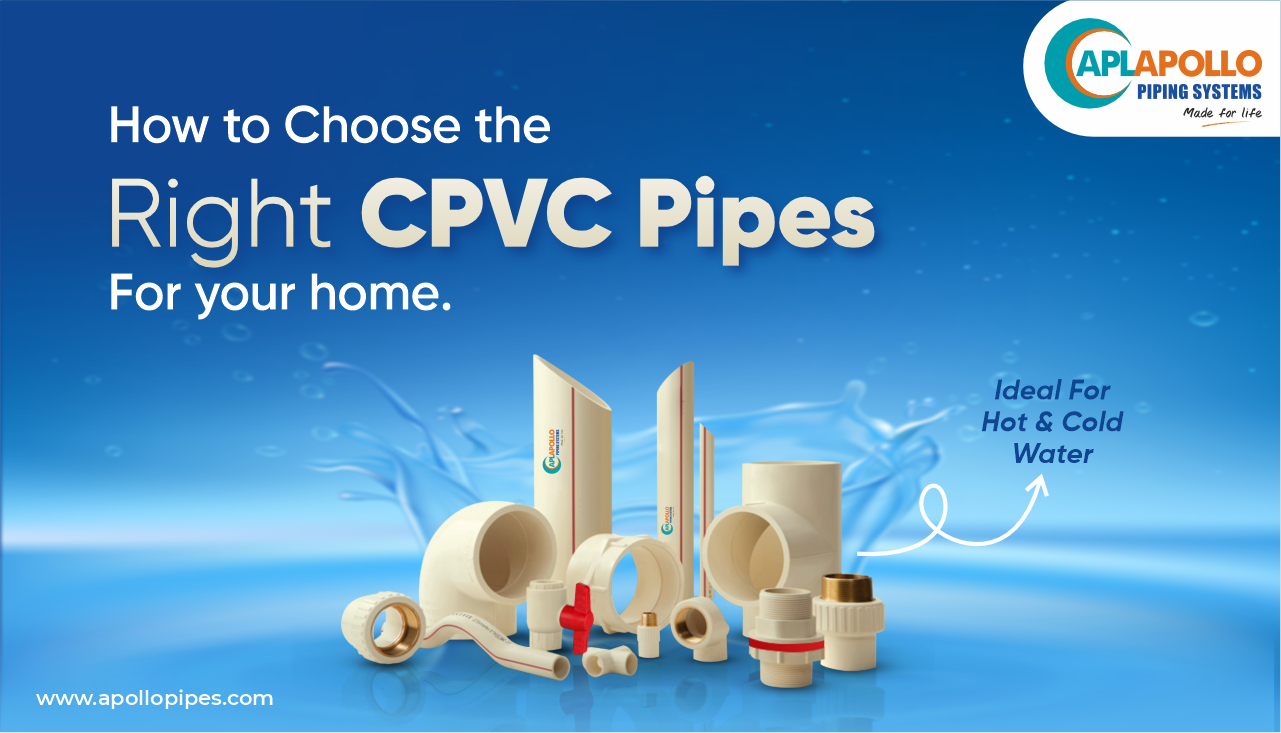
Among the various piping materials available today, CPVC (Chlorinated Polyvinyl Chloride) pipes have become increasingly popular for plumbing needs due to their durability, safety, and cost-effectiveness. By considering factors like pipe quality, size, certifications, and brand reputation, you can ensure a seamless and long-lasting plumbing solution for your household. While making a decision to purchase the CPVC pipes, take time and after considering all the aspects invest wisely and enjoy peace of mind.
We are presenting some tips to choose the right CPVC pipes for your need.
- Understand Your Needs
While purchasing CPVC pipes, it is necessary to assess your plumbing requirements. CPVC pipes are well-known for its excellent thermal resistance, hot and cold water distribution, and with stand temperatures up to 93°C, making it suitable for bathrooms, kitchens, and solar water heating systems. - Check Standards and Certifications
Ensure that the CPVC pipes you select are manufactured according to various approved national and international standards. Reputable manufacturers produce pipes that meet ASTM D1784, ASTM D2846, IS:15778, and other quality certifications. - Right Size and Thickness
CPVC pipes come in various sizes and pressure ratings, the most commonly used sizes range from ½ inch to 2 inches in diameter. These are also different types and sizes each designed for specific applications and pressure conditions, choose the appropriate size and thickness based on your home's water pressure and usage pattern. - Quality and Features
Quality always matters. You need to go for the CPVC pipes that are resistant to corrosion, scaling, and bacterial growth. High-quality CPVC piping is not only leak-proof but also offers a longer life span. Additional features like UV resistance and self-extinguishing properties (resistance to combustion) make CPVC pipes safer and more reliable, especially for homes in warmer climates or with exposed piping. - Installation and Maintenance
One of the biggest advantages of CPVC pipes is their ease of installation. They are lightweight and require simple tools and solvent cement to join, which reduces labor costs and time. Also, they need minimal maintenance over the years, saving homeowners money in the long run. - Warranty
You should always choose CPVC pipes from trusted and established brands that offer warranty and post-sale support. If they manufacturer are not willing to provide warranty, do not purchase such pipes as it may be waste of your money and time.
APL Apollo CPVC Pipes
APL Apollo CPVC Pipes are well-known for their durability, leak-proof design, UV resistance and resistance to corrosion. Lightweight and easy to handle, our CPVC pipes significantly reduce installation time, effort, and cost, making them a smart choice for both residential and commercial plumbing solutions.
These CPVC pipes are ideal for regions with temperatures ranging from 0°C to 93°C, these pipes provide high impact resistance and consistently deliver exceptional performance in varied climatic conditions.
APL Apollo CPVC pipes and fittings are approved for potable water applications in various countries such as the United States of America, Canada, Germany, UK , France, the Netherlands, and the Middle East.
Manufactured as per globally recognized standards —ASTM D1784, ASTM D2846 / IS:15778, ASTM F493, ASTM F441, ASTM F438, and ASTM F439— these CPVC pipes come with self-extinguishing properties, offering resistance to combustion and reduced thermal conductivity. Additionally, these pipes promote a cleaner and more hygienic water supply by significantly minimizing bacterial growth compared to conventional piping systems.
It is the best decision to choose APL Apollo CPVC pipes and fittings for a plumbing system that guarantees strength, reliability, and long-lasting performance.