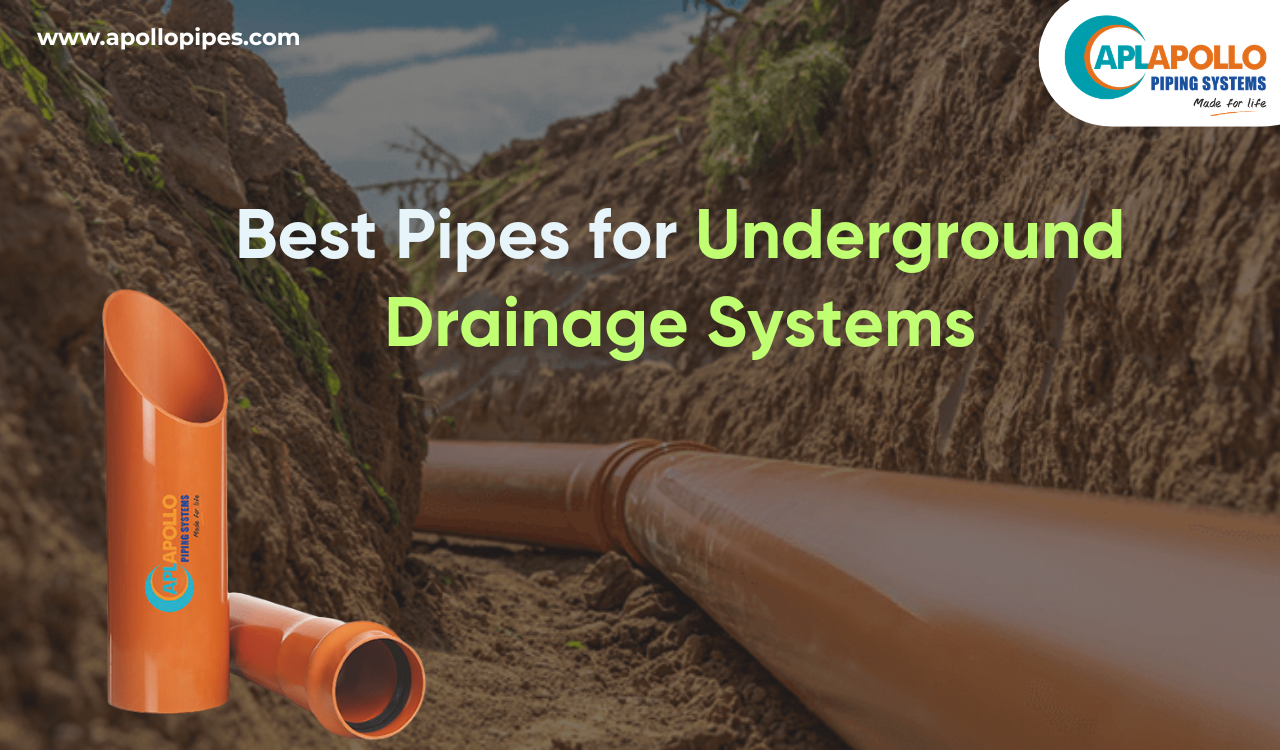
An underground drainage system is important for maintaining sanitation by preventing waterlogging and protecting the structural integrity of buildings from damage. Silently serving beneath the ground, these drainage systems direct wastewater, sewage, and stormwater away from the building.
The choice of piping is very important because, once set underground, fixing a fault is difficult and expensive. When using for underground drainage project, the pipes should be long-lasting, strong and resistant to corrosion.
Underground drainage systems’ performance depends on the type and quality of pipes you use. The pipes have to bear many things, such as soil pressure from above and tides, ground movement, and exposure to chemicals over an extended period. Modern construction practices increasingly require innovative pipe solutions that offer reliability.
PVC pipes are the most popular choice when it comes to any underground drainage system. These are very popular because of their low cost, endurance, and easy installation.
These pipes are lightweight and easy to handle which reduce labour costs during installation. Due to highly resistant to corrosion and chemicals, these pipes are perfect for wastewater and sewage disposal. Their smooth internal surface ensures a better water flow. PVC pipes have long lifespan, which can be from 50 to 100 years.
In addition to the PVC pipes, there are UPVC pipes, which are unplasticised PVC. Pipes made of UPVC are strong, rigid, and best for sewage systems. These pipes have enhanced strength and are impact resistant.
PVC pipes are suitable for residential and commercial underground drainage systems where cost efficiency and performance are the important considerations.
HDPE (High-Density Polyethylene) pipes are the other most preferred options in terms of underground drainage systems for harsh environments. These pipes are very popular for their high strength.
One of the major advantages of HDPE pipes is their jointing system, which is leak-proof. These pipes also have a long service life which may exceed 50 years. HDPE pipes are a good solution for Industrial drainage systems and for areas with ground movement and large infrastructure projects.
Concrete pipes are generally used by municipalities for underground drainage systems. These pipes are the popular and best choice because of their strength and ability to handle high volumes of water. In cities, concrete pipes are used widely for stormwater drainage and sewers due to their ability to endure traffic loads. But, using for a long time, concrete pipes can corrode when exposed to chemicals in wastewater.
In the past, older versions of underground drainage systems used cast iron pipes. Now, these are used for heavy-duty applications. These pipes are strong and durable and can handle high pressure conditions. Cast iron pipes also have good sound insulation and are not susceptible to external damage. But these pipes are costly, heavy and can corrode if not coated properly. Due to these disadvantages, it is gradually losing its importance to the more modern plastic pipes.
- Corrugated and Structured Wall Pipes
Corrugated pipes are designed with a ribbed outer surface and smooth inner surface. Such ring-shaped structure not only ensures the strength of the pipes but also the flexibility of handling. Structured wall pipes are designed to handle high external loads while maintaining lightweight structure.
Which Pipe Is Best?
Now the question arises which underground drainage pipe is best. For general drainage and in homes, choose PVC pipes. For heavy duty flexibility and durability, use HDPE pipes. For large-scale municipal drainage, use concrete pipes. You can use corrugated pipes for stormwater overflow and agricultural drainage. In today’s construction industry, PVC and HDPE pipes are the most widely used pipes due to their durability, affordability and ease of installation.
APL Apollo’s Underground Drainage Systems
APL Apollo is one of the leading manufacturers of underground drainage systems. For this, PVC is used, which is considered the best material for underground pipes. It provides a strong and sturdy surface and high tensile resistance, making them apt for underground transportation needs. These pipes are rigid with good surface strength and tensile resistance.
These PVC-U pipes also have a high compressive rating and pipe safety factor. Using an underground drainage system is wide; such a PVC-U pipe is also designed for the conveyance of surface water and potable water. Internal and external discharge piping are used widely in industrial and civil high buildings.